Description
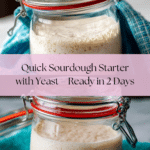
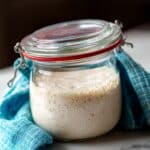
This Quick Sourdough Starter With Yeast recipe offers an accelerated way to cultivate a bubbly, active sourdough starter using a small amount of active dry yeast. Perfect for bakers seeking the tangy flavor and texture of sourdough bread without the long traditional fermentation time, this simple two-day method balances flour, water, and yeast to jumpstart the fermentation process, resulting in a lively starter that’s ready to use in your favorite sourdough recipes.
Ingredients
Scale
Initial Starter Mix
- 100 g filtered water
- 100 g unbleached all-purpose flour
- 1/2 teaspoon active dry yeast
Day 2 Feed
- 50 g filtered water (warm)
- 50 g unbleached all-purpose flour
Subsequent Feeds
- 50 g filtered water (warm)
- 50 g unbleached all-purpose flour
Instructions
- Day 1 – Mix Starter: In a large, non-metallic container, combine 100 g unbleached all-purpose flour, 100 g room temperature filtered water, and 1/2 teaspoon active dry yeast. Stir thoroughly until all ingredients are fully integrated. There is no need to proof the yeast prior to mixing.
- Day 1 – Cover and Ferment: Cover the container with a clean kitchen towel or transfer the mixture to a glass or plastic container with at least three times the volume of the starter to accommodate growth. Do not seal airtight—allow ventilation so the starter can breathe. Place in a warm, draft-free spot with stable temperature for approximately 18 hours to ferment.
- Day 2 – Stir and Transfer Starter: After fermentation, stir down the bubbles to redistribute yeast and bacteria. Transfer 50 g of the starter to a clean jar to begin feeding.
- Day 2 – Feed Starter: Feed the transferred starter by first mixing in 50 g of warm filtered water until mostly combined, then add 50 g unbleached all-purpose flour and stir until fully combined. Maintain a 1:1:1 ratio by weight of starter, water, and flour to keep the starter at 100% hydration. Discard the remaining starter except for the amount you want to keep. If you notice a layer of liquid (hooch) on the bottom, stir it back in before discarding.
- Day 2 – Wait for Activation: Allow the fed starter to ferment in a warm spot until it becomes bubbly and doubles in volume, typically taking 6 to 8 hours depending on ambient temperature and starter health. This activated starter is now ready to use for baking.
- Day 3 Onward – Maintenance Feeding: For ongoing starter maintenance, each feeding involves transferring 50 g of starter to a clean jar, then feeding it with 50 g warm filtered water and 50 g unbleached all-purpose flour, stirring until combined. Keep the starter at 100% hydration by maintaining the 1:1:1 ratio. Repeat this feeding cycle regularly to keep your starter healthy and active.
- Storage: Store your starter in a glass or plastic container that allows breathing and keep it in a warm spot for regular feedings, or refrigerate if feeding frequency decreases. When refrigerated, feed your starter at least once a week to maintain activity.
Notes
- Use non-metallic containers to avoid reactive metals that can harm the starter’s microorganisms.
- Ensure water is filtered to avoid chlorine which can inhibit fermentation.
- Room temperature water is ideal for mixing on Day 1, while warm water (not hot) aids feeding on subsequent days.
- Discard excess starter to maintain manageable quantities and provide fresh nutrients for the culture.
- If a liquid layer (hooch) forms, it signals that the starter is hungry; stirring it back in can help restart fermentation, or discard if the smell is unpleasant.
- Keep the starter in a consistently warm, draft-free environment to promote healthy fermentation.
- Once established, use the starter in your favorite sourdough recipes for delicious breads with authentic tang.
- Prep Time: 10 minutes
- Cook Time: 18 hours fermentation + 6-8 hours activation
- Category: Starter
- Method: No-Cook
- Cuisine: Bread baking
Keywords: sourdough starter, quick sourdough, active dry yeast, starter feed, sourdough baking, no-cook starter, bread making